TNT — Map Terrain
A
.tntfile is a complete playable map: tile graphics, terrain heights, feature placements (trees, rocks, hydration nodes, …), sea level, and a 252×252 minimap, all in a single self-contained file. There are no external dependencies for the geometry — drop a.tntinto a game folder and it will load. (The companion.otafile is metadata only: name, description, AI hints, start positions.)
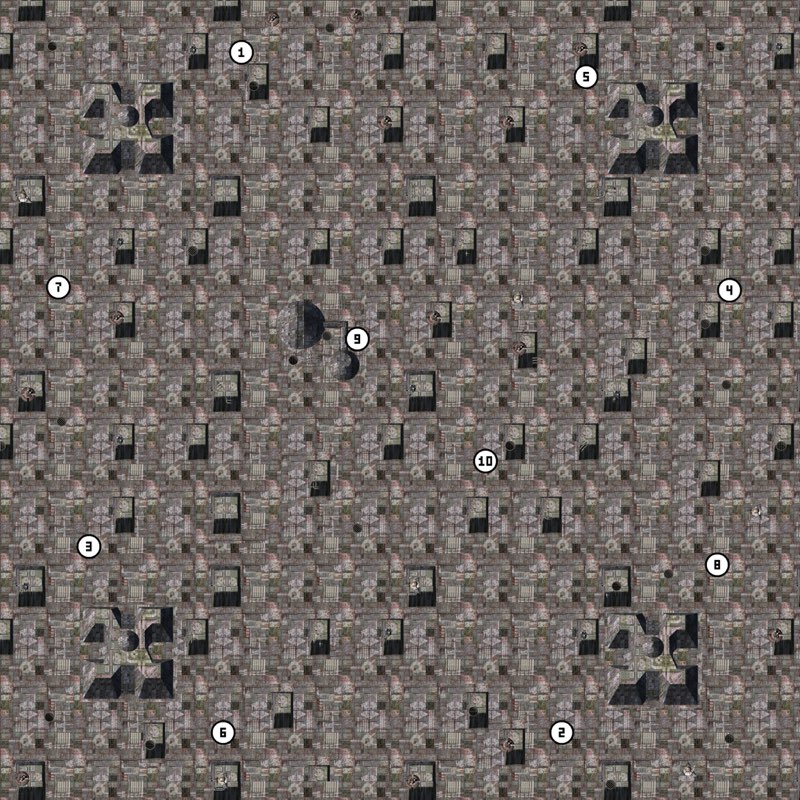
maps/metal heck.tnt — full preview with feature sprites composited from features/*.tdf
and start-position markers from the sister .ota
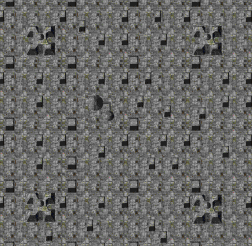
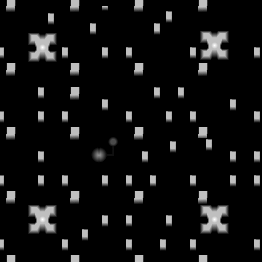
Embedded minimap (left) and normalised elevation grid (right).
Tip
Try it yourself.
kbot tnt describe  "maps/metal heck.tnt"
kbot tnt minimap   "maps/metal heck.tnt" -t mini.png
kbot tnt heightmap "maps/metal heck.tnt" --normalize -t h.png
kbot tnt image     "maps/metal heck.tnt" -t map.png        # raw tile mosaic
kbot tnt preview   "maps/metal heck.tnt" -t preview.jpg    # + feature sprites + StartPos

# And the reverse: decompose into editable files, edit, repack.
kbot tnt unpack    "maps/metal heck.tnt" -t ./metal_heck
kbot tnt pack      ./metal_heck -t metal_heck.tnt
See the CLI kbot tnt reference.
From Go. Use formats/tnt:
import "github.com/coreprime/kbot/formats/tnt"

f, _ := os.Open("maps/metal heck.tnt")
defer f.Close()
m, _ := tnt.LoadFromReader(f)
fmt.Printf("%dx%d tiles, %d unique, %d features\n",
    m.TileW, m.TileH, m.Header.Tiles, m.Header.TileAnims)
At a glance
┌─ Header (64 B) ─────────────────────────────────────────────┐
│ IDVersion (0x2000)  Width  Height (in 16-px attribute cells)│
│ PtrMapData  PtrMapAttr  PtrTileGfx  Tiles  TileAnims        │
│ PtrTileAnim  SeaLevel  PtrMiniMap  MinimapFlags  pad×4      │
└──────────────────────────────┬──────────────────────────────┘
                               │  offsets are absolute
       ┌─────────────────┬─────┴────────┬──────────────────────┐
       ▼                 ▼              ▼                      ▼
┌─ Map data ────┐ ┌─ Attributes ─┐ ┌─ Tile graphics ─┐ ┌─ Tile animations ─┐
│ uint16 grid   │ │ 4 B per 16px │ │ Tiles × 1024 B  │ │ TileAnims × 132 B │
│  (TileW×TileH)│ │   cell:      │ │  (32×32 idx)    │ │ name[128] each    │
│               │ │  h, feat, _  │ │                 │ │                   │
└───────────────┘ └──────────────┘ └─────────────────┘ └───────────────────┘
                                                                ▼
                                              ┌─ Minimap (252×252 paletted) ─┐
                                              └──────────────────────────────┘
Header (64 bytes)
typedef struct {
    uint32 IDVersion;       // 0x2000 (TA); 0x1020 is the older TA layout
    uint32 Width;           // In 16-pixel attribute cells (tile width = Width/2)
    uint32 Height;          // In 16-pixel attribute cells
    uint32 PtrMapData;      // → tile-index grid
    uint32 PtrMapAttr;      // → per-cell attributes
    uint32 PtrTileGfx;      // → tile pixel data
    uint32 Tiles;           // unique tile count
    uint32 TileAnims;       // feature table count (must be < 0xFFFB)
    uint32 PtrTileAnim;     // → feature name table
    uint32 SeaLevel;        // heights below this = underwater
    uint32 PtrMiniMap;      // → embedded 252×252 minimap
    uint32 MinimapFlags;    // 0x2c: bit 0 set = the game reads the minimap
    uint32 pad1, pad2, pad3, pad4;  // observed all zero
} TNTHeader;
Note
Three version words exist. 0x2000 is the Total Annihilation map
every tool writes. 0x1020 is an older TA layout that TA 3.1c still
reads: its attribute records are 8 bytes (height, then a one-byte
feature at byte 2, with 0xFC and up meaning none), and its minimap
pointer and flags sit at 0x38/0x3c; kbot reads it, and saving it
writes 0x2000. 0x4000 is a TA: Kingdoms map, which TA cannot load
(see TA:K maps); kbot tnt describe, the MCP
tnt_describe tool and the studio's Open Map picker say so.
Important
Width and Height are in 16-pixel attribute cells, not tiles.
Divide by 2 to get tile counts; multiply by 16 for pixel dimensions.
So a 4096×4096 px map has Width = Height = 256 (cells) and
128 × 128 = 16384 tiles in its index grid.
Tile-index grid (PtrMapData)
(Width/2) × (Height/2) uint16 entries, row-major (Y outer, X inner).
Each entry indexes into the tile-graphics array. Tiles are 32 × 32 px;
the grid is the mosaic the game blits to draw the playfield.
Note
Cavedog's tooling pads this block to a 16-byte boundary with
scratch memory. kbot tnt unpack records the padding bytes verbatim
in metadata.json (when --lossless is set) so the round-trip is
byte-identical.
Attribute grid (PtrMapAttr)
Width × Height cells of 4 bytes each, row-major. Per cell:
typedef struct {
    uint8  Height;   // Elevation (0..255)
    uint16 Feature;  // Feature placement index into the feature table,
                     //   or 0xFFFF if no feature,
                     //   or 0xFFFC if the cell is void / impassable
    uint8  _pad;     // Zero; alignment to 4 bytes
} TNTAttrCell;
The game places a feature only for a word below the feature-table count
(TileAnims); 0xFFFC marks a void cell, and every other word places
nothing. Words from 0xFFFB up are sentinels whatever the table size, so
a table must hold fewer than 0xFFFB entries. kbot tnt describe,
kbot tnt features and the asset explorer count only the placements the
game makes.
The attribute grid is denser than the tile grid by 2× in each dimension — every tile has 4 attribute cells, one per 16-pixel sub-tile. This is what lets the engine resolve unit pathing, build placement, and weapon collision at 16-pixel granularity.
Warning
0xFFFE and 0xFFFD appear in retail content (Lava Run, Metal
Heck and a couple of early campaign maps). They are not feature
indices and not void: the game places nothing there and the cells stay
buildable. kbot preserves the original value on round-trip.
Tile graphics (PtrTileGfx)
Tiles × 1024 bytes of palette indices, top-down left-right within each
32×32 block, blocks stored contiguously. The map carries all its tile
art inline — drop a TNT into the game folder, it plays.
Feature names (PtrTileAnim)
TileAnims entries of:
typedef struct {
    uint32 Index;       // Matches array position; safe to ignore on read
    char   Name[128];   // NUL-padded, references a [FEATURE] section
                        //   in features/*.tdf
} TNTFeatureEntry;
These names resolve against the [FEATURE] sections in
features/**/*.tdf (see TDF) — that's how the engine knows
which .3do mesh and which .gaf sprite to draw for "MetalTower10" or
"ArmTreeFoo". The feature's TDF entry also carries footprint, damage,
reclaim value, etc.
Note
Cavedog's tooling leaves uninitialised scratch bytes in the trailing
portion of each Name[128] after the NUL terminator. kbot tnt unpack (default) writes only the printable part to features.csv;
the round-trip rebuilds clean tables. Pass --lossless to preserve
the raw bytes exactly for byte-identical packing.
Minimap (PtrMiniMap)
uint32 Width;   // 252
uint32 Height;  // 252 (33 of the 275 retail maps store 256)
uint8  pixels[Width * Height];  // Palette indices
The game reads the stored minimap only when bit 0 of the header word at
0x2c (MinimapFlags; 0x3c in a 0x1020 map) is set; otherwise it builds the radar picture
from the tiles. All 275 retail maps set it, and so does every map the
studio saves. The game's radar uses a stored minimap only when both of
its sides are at least 252.
The map is drawn into the top-left corner of the minimap and the rest
is padding, palette index 0x64 (a few campaign maps pad with 0). The
region shows the visible map, which is 32 pixels narrower and 128
pixels shorter than the tiles (the game never shows those edges): its
longer side is 252 and the other keeps the visible map's aspect, rounded
down:
visible_w = Width  * 16 - 32;    // Width/Height in attribute cells
visible_h = Height * 16 - 128;
if (visible_w >= visible_h) { region_w = 252; region_h = 252 * visible_h / visible_w; }
else                        { region_h = 252; region_w = 252 * visible_w / visible_h; }
So 225×196 tiles gives a 252×216 region, 128×96 (ac04) gives 252×182
and 96×128 gives 193×252. The region is fixed by the map's size, not by
the pixels: some retail minimaps have no padding at all (ac01, ac04
to ac11 fill 252×256), and the region is still the computed one.
kbot-io's Map.MinimapContentBounds and MinimapContentSize compute it;
the asset explorer places StartPos markers in it, and the studio saves a
minimap built this way (Map.BuildMinimap: each minimap pixel is the
average colour of the map pixels it covers).
Worked example — metal heck.tnt
$ kbot tnt describe "maps/metal heck.tnt"
File Size: 973176 bytes

Header:
  IDVersion:   0x2000 (Total Annihilation)
  Width:       262 (16px cells) -> 131 tiles, 4192 pixels
  Height:      262 (16px cells) -> 131 tiles, 4192 pixels
  SeaLevel:    1
  Tiles:       583 unique
  Features:    28 in table, 74 placements
  Minimap:     252x252
  MinimapFlags: 1 (bit 0 set, the game reads the stored minimap)
  Pads:        0 0 0 0

Elevation:
  min=13 max=181 mean=24.7  cells below sealevel: 0 (0.00%)

Top features:
  [  6] MetalTower10  count=10
  [ 14] MetalTower09  count=9
  [  5] MetalVent01   count=8
  ...
Reading this: Metal Heck is a 4192×4192-pixel map made from 583 unique
tiles, 74 feature placements drawn from 28 distinct feature definitions.
The "Metal" world archive supplies the .tdf definitions for those
features.
Unpacking and editing
kbot tnt unpack <file.tnt> --target <dir> produces a layout that the
matching pack command reads back:
metal_heck/
├── map.png            full RGBA render of the tile mosaic
├── heightmap.png      8-bit grayscale, pixel value = raw elevation byte
├── minimap.png        paletted PNG of the embedded minimap
├── tiles/<n>.png      paletted 32×32 per unique tile
├── tilemap.csv        2D grid of tile indices (rows = y, cols = x)
├── features.csv       feature_index,name,attr_x,attr_y per placement
└── metadata.json      header constants + round-trip data
Edit any of the above and re-pack:
kbot tnt pack ./metal_heck --target metal_heck.tntImportant
Default unpack is lossy. The feature name table is dropped from
metadata.json and rebuilt at pack time from the unique names in
features.csv. This loses any trailing scratch bytes Cavedog's tooling
left in the table. For byte-identical round-trips, pass
--lossless to record the raw feature bytes:
kbot tnt unpack "metal heck.tnt" -t ./metal_heck --losslessSister .ota files
Every .tnt ships with an .ota ("Online Total Annihilation") sidecar
in the same directory. That's where mission metadata lives: human-readable
name, planet name, weather, gravity, start positions, AI brief, etc.
See TDF — .ota is the same INI-like text format as .fbi
and .tdf. kbot tnt preview reads it automatically to draw the
numbered start-position markers in the preview image. Every kbot view of
a map reads the .ota's schemas and start positions the way the game
does (see TDF — OTA); the studio map editor
edits an opened map's .ota in place on save.
Gotchas
Warning
The map editor (TAE) writes Height = actual_height + 6 in some
versions — Saruman's 1997 documentation noted "weird, 6 more than
used". Modern tooling treats the header dimensions as authoritative
and ignores the unused trailing rows. kbot's reader matches this
behaviour.
SeaLevel == 0does NOT mean "no water" — it means height byte 0 is the highest underwater height, i.e. nothing is underwater. Maps with no water typically useSeaLevel = 1.- Tile indices are
uint16so a single map can have up to 65,536 unique tiles — but in practice anything beyond a few thousand will push the engine into memory-pressure swap. Metal Heck (583 tiles) is closer to the median than the tail. The studio refuses to save a map that needs more, andkbot tnt packrefusestilemap.csvvalues that are not indices of the map's tiles (such as-1or70000, which would wrap to 4464). A cell naming a tile past the tile set loads (the game reads past its tile set);kbot tnt lintreports it asbad-tile-index. - Minimap padding is palette index
0x64; the engine ignores pixels outside the map region. MinimapFlags(0x2c, or0x3cin a0x1020map) bit 0 must be set or the game ignores the stored minimap. Keep the other bits as found.- The four
padfields are always zero. Some third-party editors write non-zero values; the game appears to ignore them but kbot will preserve whatever it finds. - TA: Kingdoms uses a related but incompatible map format (
.btm/.bmpheightmaps + tile pages). See TA:K maps.
Typical sizes
| Asset | Range observed in Cavedog maps/*.tnt |
|---|---|
| File size | 0.3 – 7 MB |
| Map dimensions (tiles) | 64×64 – 256×256 (i.e. 2048 – 8192 px sides) |
| Unique tiles | 200 – 2000 |
| Feature placements | 10 – 600 |
| Feature definitions in table | 5 – 50 |
| Header overhead | always 64 bytes |
| Minimap (252×252 paletted; 33 retail maps 252×256) | 63504 bytes |
Companion .ota text size |
1 – 8 KB |
Live examples in the reference catalogue
Notable maps to study — extract from any TA install at
maps/<name>.tnt:
metal heck.tnt— featured in the worked example above. 4192×4192 px, 583 unique tiles, 74 feature placements. Iconic resource-rich map.a gentle time.tnt— small 4-player map; good starter when prototyping a TNT viewer or render pipeline.lava run.tnt— has unusual0xFFFEfeature sentinels in the attribute cells (one of the maps that drove the early reverse engineering edge cases).acid foursome.tnt— large 8-player map, demonstrates far-spread[Schema 0]start positions in the sister.ota.example.tnt— the smallest shipped TNT (~263 KB); minimum viable map forkbot tnt unpack/packround-trip testing.
For TA: Kingdoms TNT variants (different IDVersion word), see the TA:K maps research notes.
See also
- SCT — the building blocks that TAE assembles into TNTs.
- TDF — feature definitions resolved by name, and the
.otasister file format. - PAL — the palette used to render tile pixels and minimap.
- GAF — feature sprites composited by
kbot tnt preview. - TA:K maps — the very different TA: Kingdoms map pipeline.
- Glossary — attribute cell, sea level, void cell.